


Rusty Lake: Roots
4.7780.00 Reviews
App Specs
- Version
- 3.1.6
- Updated On
- License
- $2.99
- Downloads
- 100,000+
- Developer
- Rusty Lake
- Categories
- Adventure
- Platform
- Android, iOS
Screenshots
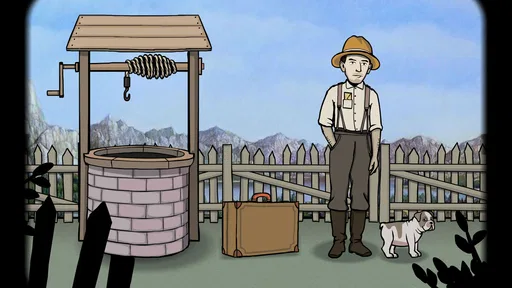
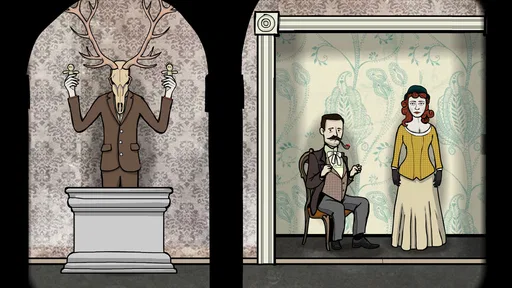
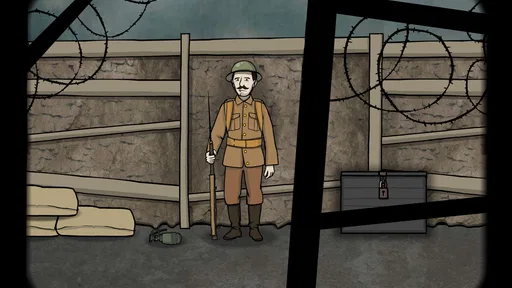
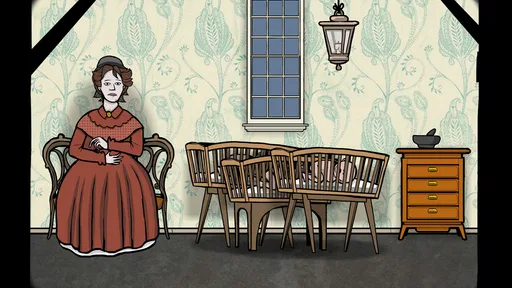

 Analysis by AppCompare
I went into Rusty Lake: Roots expecting a compact point-and-click adventure, but what stayed with me was the way every small action seems to open another piece of a much larger family story. You click, inspect, combine clues, solve a strange little problem, and then watch the world respond. That response is often unsettling, sometimes funny, and usually just mysterious enough to make me try one more puzzle before putting my phone down.
Developed by Rusty Lake, this adventure game is built around a family tree rather than a single hero moving through a conventional quest. It costs $2.99, carries a Teen content rating, and has earned a 4.7 average from around 16 thousand ratings. Those details give a useful picture of its position: this is a paid, focused experience with a strong audience, not a disposable free game designed around constant interruptions.
I think the most important thing to understand before installing it is that the appeal is not fast movement or reflexes. The pleasure comes from noticing relationships between objects, people, rooms, and events. If you enjoy quiet investigation, unusual storytelling, and puzzles that make you feel clever without explaining every answer, this is one of Rusty Lake’s more memorable places to spend a few evenings.
Starting with one action and learning how the world answers
The first action in a typical scene is simple: I tap something that looks relevant. It might be a character, an object, a cupboard, a picture, or a detail that would be easy to ignore in another game. The interface keeps the process approachable, but the meaning of each tap is not always obvious. A harmless-looking item can become the missing part of a solution several steps later.
That creates a useful distinction between seeing and understanding. I can often identify what I can interact with, yet still have no idea why it matters. Rather than giving me a long tutorial, the game lets the environment teach me through consequences. I try an action, receive a visual or narrative response, and then reconsider the scene with that new information in mind.
The family structure gives these actions more weight than they would have in a collection of unrelated puzzles. Characters are not merely temporary puzzle pieces. Their connections and changing circumstances help make the separate scenes feel like parts of one strange history. Even when I was focused on a single lock, object, or sequence, I was also building a clearer impression of the family around it.
One practical tip is to inspect every area carefully before committing to a theory. The game rewards attention to small visual details, and rushing toward the most obvious object can leave me with an incomplete understanding of the puzzle. I also found it useful to remember unusual symbols, arrangements, and character reactions instead of assuming that every clue would be repeated when I needed it.
Worth Reading Before You Choose

EA SPORTS FC Mobile 26 Is a Bigger Football Game, but It Takes Time

Flipboard Shows What News Apps Must Do Beyond the Feed

Switching to Android Auto Means Rethinking Your Driving Routine

Google Calendar Makes a Crowded Week Easier to Manage

Ludo King Makes the Most of the Minutes Between Plans

Baby Panda World Brings Quick Play to Modern Phones, but Its Game Library Feels Busy
This is where the experience differs from many casual mobile adventures. The screen is not just a menu of things to tap in a fixed order. It is a compact space where the order of discovery affects how I interpret what I see. I am not solving by speed; I am forming and testing a mental model of the room.
The feedback rhythm keeps each scene moving
A good point-and-click game needs a satisfying rhythm: action, feedback, adjustment, and another action. Roots handles that rhythm through small changes in the scene and through the odd logic of its situations. When I choose correctly, something opens, moves, changes, or reveals a new possibility. When I choose incorrectly, I usually learn that my assumption was incomplete rather than simply being punished.
The feedback is not always a loud celebration. Often it is a quiet confirmation that I have advanced: a new object becomes useful, a character’s situation changes, or a previously decorative detail gains purpose. I like that restraint because it keeps the mood intact. The game does not break its unsettling atmosphere every few seconds to congratulate me.
That same restraint can create friction. There are moments when I know I have found an interactive element but cannot tell whether I am missing a clue or merely approaching it in the wrong order. The game expects patience and observation, and players who prefer explicit objectives may find the lack of direction uncomfortable. I occasionally had to step away, think through the scene, and return with a different interpretation.
My most reliable workflow was to separate observation from experimentation. First I looked through the whole scene and noted anything unusual. Then I tried obvious interactions, watched the response, and only after that started combining clues. This prevented me from tapping randomly and helped me recognize when a puzzle was asking for a sequence rather than a single answer.
Another useful habit is to treat character behavior as feedback, not just decoration. The people in these scenes can communicate the importance of an action through their position, expression, or response. That does not turn the game into a dialogue-heavy adventure, but it does mean the human figures deserve the same attention as objects and symbols.
The result is a loop that feels more thoughtful than repetitive. I act because something looks suspicious, receive a response that narrows the possibilities, and then act again with a better question in mind. The game’s strangeness makes that process especially effective: an unexpected result is often a clue about the world’s rules, not merely a random joke.
What the reward feels like when a puzzle gives way
The reward in Roots is not mainly a score or a collection of upgrades. It is the feeling that a confusing arrangement has suddenly become legible. A solved puzzle changes my understanding of the scene, and sometimes changes my understanding of the family story as well. That double reward is what kept me engaged: I was not only clearing obstacles, I was assembling context.
I also appreciate that the game makes small victories matter. A modest interaction can reveal a new relationship, expose an uncomfortable detail, or point toward a later event. Because the story is distributed across many scenes, I was encouraged to remember what I had seen rather than treating each puzzle as disposable.
This makes the game particularly suitable for players who enjoy discussing interpretations after playing. I often wanted to explain a strange moment to someone else, not because the mechanics were difficult to describe, but because the meaning was open enough to invite conversation. The unusual tone is part of the reward, and it is much more distinctive than the familiar fantasy or detective presentation found in many mobile adventures.
There is also a practical reward for playing slowly. If I rushed, I could complete an interaction without appreciating why it mattered. If I paused to examine the setting and connect it with earlier details, the game felt richer. My advice is to avoid treating each puzzle as a task to eliminate. Let the scene sit for a moment. The visual composition often carries information that a conventional objective marker would normally provide.
That said, the reward is less satisfying for anyone who wants constant novelty. Some players may find the repeated pattern of inspecting, testing, and interpreting too quiet. There are no reflex challenges to break up the investigation, and the game does not aim to provide the broad exploration of a large action-adventure title. Its ambition is narrower and more atmospheric.
Compared with a typical hidden-object game, Roots asks for more reasoning and gives less comfort through obvious item lists. Compared with a traditional mystery adventure, it is more compact and surreal, with a stronger focus on symbolic scenes and family connections. Compared with free mobile puzzle games, its paid structure removes the pressure to wait for energy or manage a stream of promotional interruptions, while also asking me to accept a less guided experience.
Why another session begins after I put it down
The reset point is important. After solving a scene, I usually feel that I have completed something, but not that the entire mystery has been explained. That balance creates the reason to begin another session. A new chapter, person, or situation can make earlier details feel newly relevant, so returning does not feel like repeating the same puzzle.
This works especially well on a phone because the game supports short, deliberate sessions. I could play while waiting for an appointment, stop after a successful solution, and return later without needing to remember a complicated control scheme. The mental state does require some continuity, though. If I left in the middle of a puzzle, I sometimes needed a minute to reconstruct what I had already tested.
For that reason, I recommend ending a session after a meaningful breakthrough rather than in the middle of a confusing search. A quick note about the remaining objects or the question I was testing made the next return much smoother. This is a small habit, but it matters in an adventure where clues may be visual and the game may not constantly restate the goal.
The reset is also emotional rather than purely mechanical. A solved scene can be disturbing, amusing, or simply strange, and the next session begins with curiosity about what kind of situation will follow. Rusty Lake understands that a little discomfort can be motivating when it is paired with a clear interactive question. I wanted to see the next response, even when I suspected it might make the story less comfortable.
Players who need a strong sense of closure after every chapter should know what they are choosing. The game’s appeal depends on continuing threads and unanswered implications. If you prefer self-contained levels with a clean explanation at the end of each one, a more conventional puzzle collection may feel more rewarding. Here, the reset works because the larger family narrative remains active in the background.
The game is also a better match for headphones-off, visually focused playing than for a noisy multitasking session. I could technically play casually, but the details deserve attention. When I was distracted, I was more likely to overlook a visual relationship and blame the puzzle for being vague. In a quiet setting, the same scene felt much more readable.
Who should play it, and who should choose something else
I would recommend Roots to anyone who likes point-and-click adventures with a strong visual identity, compact puzzles, and stories that are willing to be unsettling. It is a particularly good choice if you enjoy examining a scene, forming a theory, and learning through trial rather than following a highlighted route. The family-tree premise gives the game a structure that makes the individual encounters feel connected.
It is less suitable for players looking for combat, open-world movement, character customization, or a relaxed puzzle game with bright, reassuring presentation. The Teen rating is worth taking seriously because the subject matter and imagery can be uncomfortable. Even without describing every surprise, I would not choose it for a young child or for someone who dislikes macabre themes.
I would also steer away from it if your ideal mobile game is something you can play with half your attention while watching another screen. The controls are simple, but the thinking is not always simple. The experience depends on noticing relationships, remembering details, and accepting that the answer may not be immediately signposted.
On the other hand, the modest price makes sense for the kind of experience it offers. At $2.99, I see it as a focused purchase rather than an endless service. You are paying for a strange adventure to explore at your own pace, not for a system built around repeated daily tasks. That makes it easier to recommend to someone who would rather finish a distinctive game than maintain a long-term mobile routine.
The Android requirements are also approachable: the current version is 3.1.6 and it supports devices running Android 6.0 or later. That does not guarantee identical performance on every phone, but it means the game is not positioned only for recent hardware. If you are deciding between playing on a phone or tablet, I would favor the larger screen when possible because small environmental details are central to the puzzles.
The loop verdict after following the family story
What makes Rusty Lake: Roots work is the complete cycle. I take an action because a detail catches my eye. The game responds with a concrete change, a new clue, or a stranger question. That feedback gives me enough direction to try again without removing the satisfaction of figuring things out. The reward is both a solved puzzle and a deeper sense of the family’s history. Then I stop, reset my attention, and return because the next scene promises another piece of the pattern.
That loop is stronger than the store summary might suggest because the game’s real appeal lies in how its parts reinforce one another. The puzzles make me inspect the world, the world makes me curious about the characters, and the characters make the next puzzle feel meaningful. I did encounter moments of uncertainty, and I would have welcomed clearer guidance in a few places, but those rough edges are tied to the same independence that makes the experience distinctive.
With around 100 thousand installs and a 4.7 average, it has clearly found an audience for its unusual approach. I understand why. Rusty Lake: Roots is not the safest recommendation for every adventure fan, but it is an easy recommendation for the right person: someone who wants a paid mobile game with atmosphere, visual clues, odd humor, and a reason to keep looking after the obvious answer has disappeared.
My final advice is to play it patiently, inspect before guessing, and accept that confusion is part of the design rather than proof that you are doing something wrong. If that sounds appealing, this is a compact adventure I would gladly hand to a friend who wants something more memorable than another interchangeable puzzle app. If you need speed, bright comfort, or constant explanation, choose a more conventional alternative. For everyone else, the family tree is worth entering.
Pros
- Hand-drawn visuals create a distinctive
- unsettling atmosphere.
- Short chapters make it easy to play in brief sessions.
- Hints are available when a puzzle becomes difficult.
- The family-tree structure gives the story a satisfying sense of progression.
- Offline play is convenient for travel or limited connectivity.
Cons
- Some puzzles rely on obscure clues rather than clear logic.
- The grim themes may not appeal to players seeking a light adventure.
- A few solutions require repeated tapping and careful pixel hunting.
- The game offers limited replay value after all achievements are found.
- Its slower pace may feel frustrating for players expecting constant action.
FAQs for Rusty Lake: Roots
What is Rusty Lake: Roots about?
Rusty Lake: Roots is a story-driven point-and-click adventure game centered on the Vanderboom family. You explore different moments across several generations, solve unusual puzzles, and uncover secrets connected to the mysterious Rusty Lake universe. The game combines a dark atmosphere, surreal imagery, and a carefully connected family story, making it more focused on discovery and narrative than fast-paced action.
How does the gameplay in Rusty Lake: Roots work?
The game uses classic point-and-click mechanics. You tap objects, collect items, combine clues, interact with characters, and solve self-contained puzzles in a series of scenes. Each chapter usually introduces a specific situation or family event, while the solutions gradually reveal more of the larger mystery. Progress depends on observation, experimentation, and understanding how objects and clues relate to one another.
Is Rusty Lake: Roots suitable for children?
Although the controls are simple, Rusty Lake: Roots is not designed specifically for young children. Its unsettling visual style, references to death, disturbing family events, and occasional dark humor may be uncomfortable for some players. The puzzles can also be abstract and require patience. Parents should review the game’s age rating and themes before allowing younger children to play.
Does Rusty Lake: Roots require an internet connection?
Rusty Lake: Roots is primarily a single-player experience, and the main story can generally be enjoyed without a continuous internet connection after installation. You do not need online multiplayer or live interaction with other players. An internet connection may still be required for downloading the game, receiving updates, restoring purchases, or using platform-specific services such as cloud saves.
Is Rusty Lake: Roots worth downloading?
Rusty Lake: Roots is a strong choice if you enjoy atmospheric puzzle adventures, unconventional storytelling, and games that reward careful observation. Its hand-drawn presentation, strange characters, and interconnected chapters create a memorable experience. However, players looking for action, realistic graphics, or straightforward puzzles may find it slow or confusing. The game is best suited to those who appreciate mystery and experimentation.


